All Categories
Featured


Building Trust With Advanced Search Management
Table of Contents
This includes your business name (precisely as it appears in the real life), total address with suite numbers, main phone number (regional, not toll-free), site URL, business hours consisting of special hours for holidays, and an in-depth company description incorporating relevant keywords naturally. Select the most particular main category for your businessthis single selection carries significant ranking weight.
Include secondary classifications that precisely describe additional services, but prioritize precision over keyword stuffing. A dental practice may select "Dental practitioner" as main and include "Cosmetic Dental expert" and "Emergency Situation Dental Service" as secondaries if those services are really offered. Publish top quality images regularlybusinesses with pictures get 42% more requests for directions and 35% more click-throughs to their websites than those without.
Google's data shows that businesses publishing images weekly see increased engagement, so develop a consistent publishing schedule instead of submitting whatever at as soon as. Add a logo design and cover photo that enhance your brand identity. These appear plainly in Map Load results and assist your listing stand out aesthetically. If appropriate, include 360-degree virtual trips, which Google highlights with unique badges and which substantially increase engagement for location-based companies like restaurants, hotels, and stores.
While posts expire after 7 days, keeping an active posting schedule signals to Google that your organization is actively handled and engaged with consumers. Posts likewise offer extra chances to integrate relevant keywords and calls-to-action that drive conversions. Enable all relevant characteristics for your businessthese special features like "wheelchair available," "complimentary Wi-Fi," "outside seating," or "women-led" help your service appear in more particular searches and offer valuable details to potential consumers.
Optimizing for Nearby Search Within 5 Miles
Local citationsmentions of your organization name, address, and telephone number (NAP) on other websitesfunction as trust signals that validate your organization's legitimacy and place. Google cross-references information from numerous sources to validate service information, making citation consistency an important ranking element. Disparities create confusion and deteriorate trust in your business information.
These platforms disperse organization details to hundreds of downstream directory sites, apps, and services, producing a multiplier impact from a single precise submission. Making sure precision at the aggregator level avoids inconsistencies from proliferating across the citation community. Next, claim and optimize listings on industry-specific directory sites relevant to your business. A restaurant ought to prioritize Yelp, TripAdvisor, and OpenTable; a professional service ought to focus on market associations and local chambers of commerce; a seller might highlight shopping directory sites and evaluation platforms.
Keep perfect NAP consistency across all citations. Use the identical organization name format, address structure, and telephone number all over. Even minor variations"Street" versus "St.," including or leaving out suite numbers, formatting phone numbers differentlycan water down citation value. Develop a reference document with your canonical NAP info and use it regularly throughout all platforms.
[target1:anchor_exact1]
Local directory site communities differ substantially in between Singapore, Malaysia, Indonesia, and China, needing market-specific strategies instead of one-size-fits-all approaches. Reviews directly impact Map Load rankings through numerous mechanisms: review quantity, review speed (how frequently you receive new reviews), evaluation scores, and evaluation recency all aspect into Google's prominence calculations. Beyond algorithmic results, reviews influence consumer behavior93% of consumers report that online evaluations affect their buying decisions, making review management both a ranking factor and a conversion optimization method.
The most reliable techniques integrate evaluation demands into existing customer touchpoints: post-purchase emails, service conclusion follow-ups, receipt emails, or consumer success check-ins. Timing mattersrequest reviews when client complete satisfaction peaks, usually instantly after a favorable interaction or successful outcome. Make leaving reviews simple and easy by supplying direct links to your Google Service Profile evaluation page.
Improving Small Business Search Rankings for 2026
Some services create shortened URLs or QR codes that can be shared by means of multiple channels, from email signatures to printed products at physical locations. Make sure team members understand they should never offer incentives for reviews (violating Google's policies) however can stress how reviews assist other customers make informed decisionsan technique that resonates with community-minded clients.
Google's information recommends that businesses responding to reviews see higher rankings, and consumers see organizations that respond as more trustworthy and customer-focused. Aim to react to every review within 24-48 hours while the conversation stays prompt and pertinent. For favorable evaluations, express authentic appreciation and personalize reactions by referencing specific information from their review.

Negative reviews, while unpleasant, can really strengthen your company profile when handled appropriately. A mix of evaluations appears more authentic than best 5-star scores, and thoughtful reactions to criticism demonstrate accountability and client dedication.

Latest Posts
High-Impact Local Search Strategies for Small Business Success
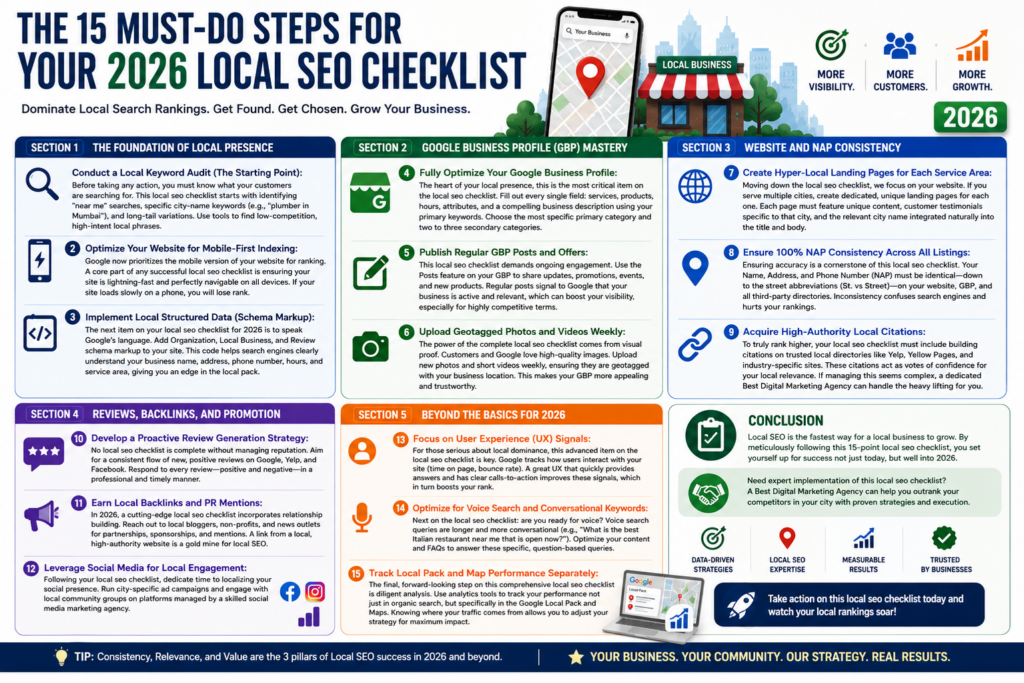
Mastering Local Search Rankings for 2026
Managing Customer Reviews to Boost Rankings