All Categories
Featured


How Local Optimization Increases ROI
Table of Contents
A slow-loading page may never be consisted of in an AI Introduction, regardless of how great the material is.? Time for the primary content to load. Target: under 2.5 seconds.?
Target: under 200ms.? 0.1 CLS Cumulative Design Shift. Visual stability. Target: under 0.1 (components shouldn't leap around). Top Page Speed Optimization Methods? Transform images to WebP/AVIF: Modern formats lower file sizes by 3070% vs JPEG with no visible quality loss? Implement lazy loading: Only load images/videos as users scroll toward them? Minify CSS, JavaScript, and HTML: Eliminate whitespace, comments, and unused code? Eliminate render-blocking resources: Delay non-critical JavaScript; use async loading? Use a CDN: Material Delivery Networks serve possessions from servers geographically closer to the user? Enable internet browser caching: Return visitors fill your site from cache, not from scratch? Upgrade your hosting: Shared hosting is frequently the single greatest speed traffic jam Enhance for Mobile It's Now the Main Ranking Variation Google uses mobile-first indexing by default.
With 62.73% of all web traffic originating from mobile devices, this isn't optional. Mobile SEO Checklist? Responsive design: Your layout must adjust fluidly to all screen sizes not just phone-sized, but tablet and big phone too? Tap targets? 44px: Buttons and links must be large enough to tap precisely on touchscreens? Readable font style sizes: Minimum 16px body text to prevent Google's "small typeface" warnings? No intrusive interstitials: Full-page popups that cover material on mobile are a manual action risk? Same content on mobile: Google's mobile crawler must be able to see the exact same material as desktop don't hide key sections behind accordions that do not open by default? Pass Google's Mobile-Friendly Test for each essential page Ensure Browse Engines Can Discover and Index Your Pages A completely enhanced page is worthless if Google can't crawl it.
[target2:anchor_exact1]look for unexpected blocks # BAD: This blocks Googlebot from your ENTIRE site User-agent: Googlebot Disallow:/ # GOOD: Allow all crawlers (default if no disallow rules) User-agent: * Disallow: # ALSO: Don't block AI spiders if you desire AI Introduction coverage User-agent: OAI-SearchBot User-agent: PerplexityBot User-agent: anthropic-ai Allow:/ Critical 2026 Note AI Crawlers Blocking AI crawlers like OAI-SearchBot (ChatGPT), PerplexityBot, and Googlebot for AI Overviews implies your material won't appear in AI-generated responses.
Leveraging Local Reviews to Boost Authority
Key pages don't have noindex meta tags inadvertently applied? No pages return 404 mistakes that must be returning 200 (check Google Search Console's Protection report) Phase 6: 2026-Specific Optimizations Future-Proof Your SEO for AI Browse These 3 actions deal with the biggest shift in search since Google's founding: the rise of AI-generated answers.
Studies show they minimize organic CTR by an average of 34.5% on the very first organic outcome. They also generate new impressions. The brand names winning in 2026 are those enhancing for both traditional rankings and AI citation.? 44.2% of all AI citations originate from the first 30% of text your introduction is your most essential section? Content depth (word count, sentence count) matters more for AI citation than traffic or backlinks? ChatGPT chooses material with guaranteed language, enigma, high entity density, and easy structures? Pages that load quicker are more likely to be consisted of by AI due to retrieval timeout restraints Optimize Content to Be Mentioned by AI Overviews and LLMs Generative Engine Optimization (GEO) is the emerging discipline of structuring material so it gets mentioned by AI systems.
The playbook is various from conventional SEO but complementary to it. GEO Optimization Techniques? Answer Box Format: Structure your material so that each heading is a concern and the very first 4060 words beneath it straight answer that concern. This is the main source format for AI citations.? Accurate Density: Include particular numbers, data, and information points.
? Use Definitive Language: Avoid hedging with "some say" or "it's possible that." State realities with confidence with sources. AI models are most likely to cite material that makes clear, direct claims.? Include a Strong Frequently Asked Question Section: FAQ sections are among the most often pointed out material formats in AI Overviews.

Future-Proofing Local Search 2026 Strategies
? Entity Optimization: Clearly name the crucial entities (people, locations, brands, ideas) appropriate to your topic. Google's understanding chart rewards entity-rich material.? Implement JSON-LD Schema: Structured information makes it significantly easier for AI systems to parse and cite your material precisely. Construct Author and Brand Authority That AI Systems Trust AI systems similar to Google's quality raters assess whether a source is trustworthy before mentioning it.
[target2:anchor_exact1]Establish a systematic monitoring procedure so you always understand what's working, what's declining, and where brand-new opportunities lie. Important Tracking Metrics METRIC TOOL REVIEW FREQUENCY Organic impressions & clicks Google Browse Console Weekly Keyword rankings Semrush/ Ahrefs/ GSC Weekly Core Web Vitals scores PageSpeed Insights/ Browse Console Monthly Crawl mistakes & index protection Google Browse Console Weekly Material performance (time on page, bounce rate) Google Analytics 4 Regular monthly AI Summary looks Semrush Position Tracking/ manual checks Month-to-month Content decay (pages losing traffic) Google Analytics 4 + GSC Quarterly The Iterative SEO Cycle The most effective SEO teams run on a 90-day evaluation cycle: audit existing material for decay, revitalize the leading 20% of decreasing pages, publish brand-new content targeting determined keyword gaps, construct internal links to new pages, then measure outcomes at the 90-day mark.
Why Map Pack Optimization Drives ROI
This list covers every on-page SEO signal that matters in 2026 from traditional principles to cutting-edge AI optimization. Bookmark it, resolve it step by action, and review it every quarter.
Voice search, visual content, and AI are reshaping the landscape. This list will guide you through necessary SEO practices. From voice search optimization to AI-driven material, we cover it all.
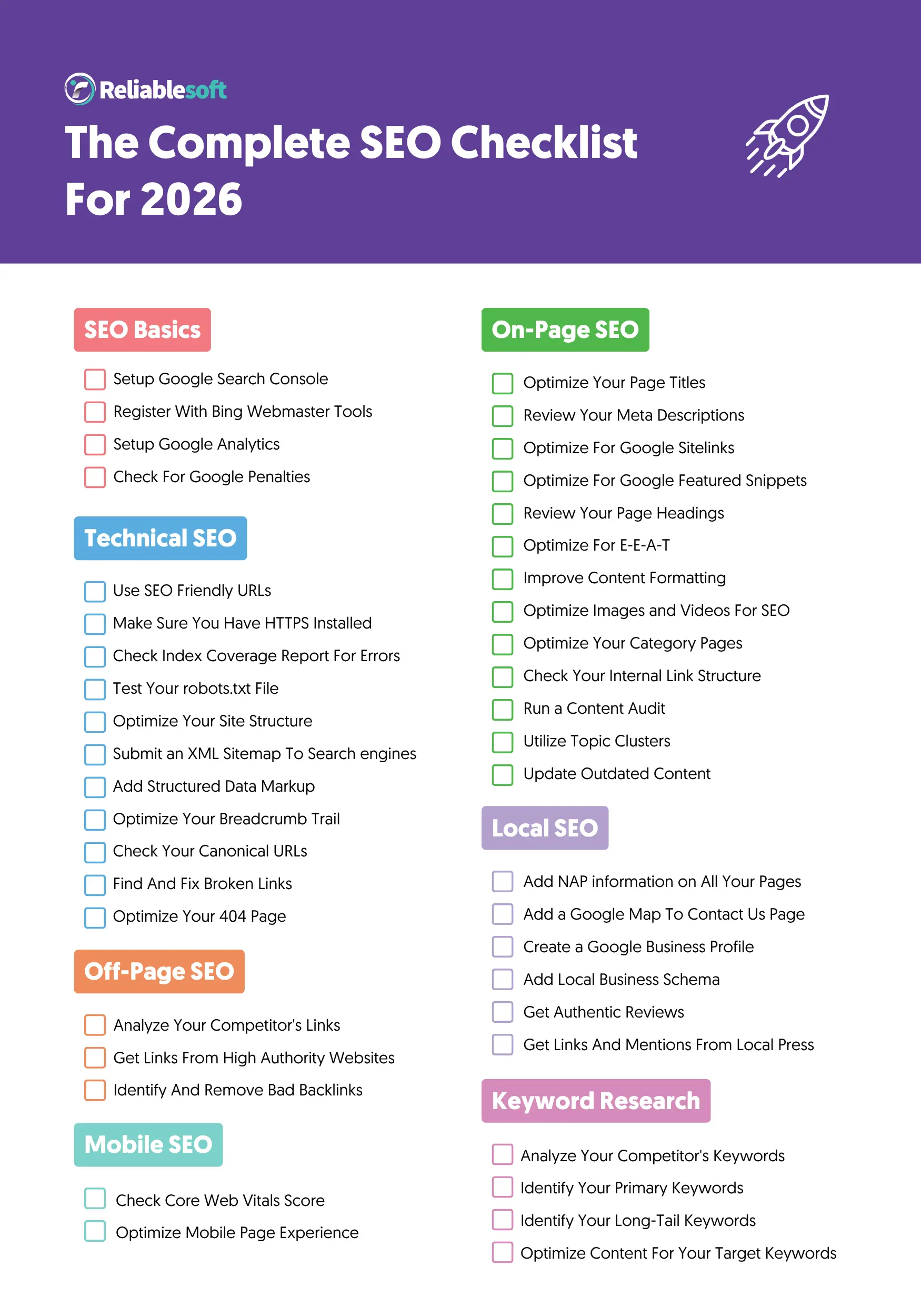
Let's dive into the future of SEO together. Search engines develop rapidly. An SEO list assists improve your strategy.
A checklist provides structure. It's your roadmap to success in the ever-changing world of SEO. Building a strong SEO foundation is crucial.
They assist browse engines understand your material and its importance. Craft special, keyword-rich titles for each page. Usage H1, H2, and H3 tags to structure content for clearness.

Latest Posts
High-Impact Local Search Strategies for Small Business Success
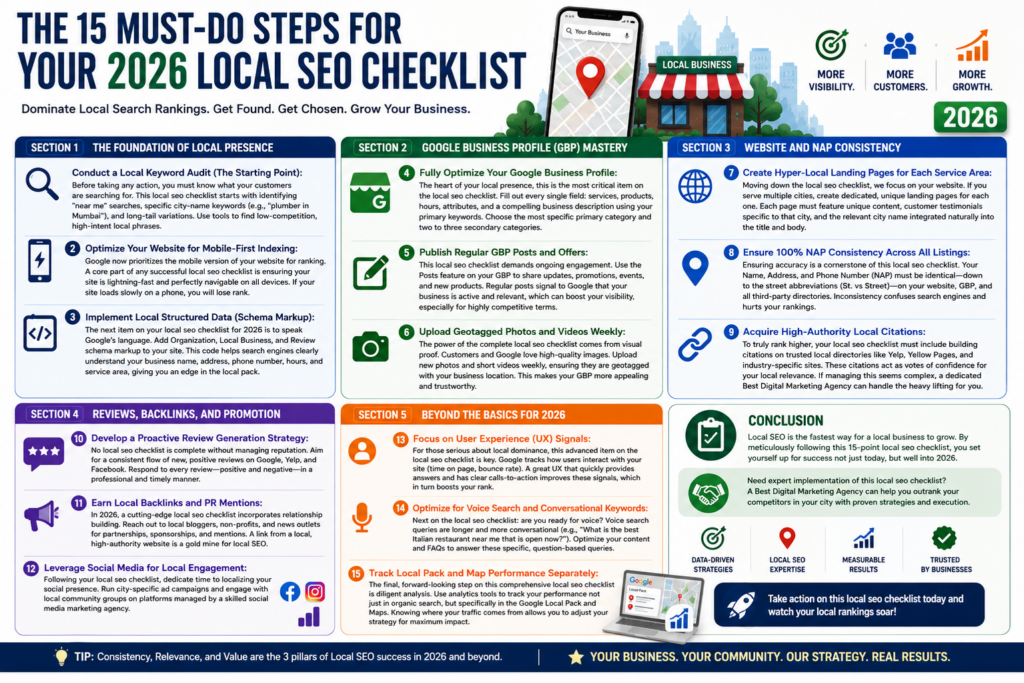
Mastering Local Search Rankings for 2026
Managing Customer Reviews to Boost Rankings